In September 2026 Apple unveiled the Apple Watch Series 12 and Apple Watch Ultra 4, with both models focusing much more heavily on health monitoring, Apple Intelligence and battery efficiency than on physical redesigns. Series 12 remains Apple’s mainstream premium smartwatch, while Ultra 4 continues as the larger, tougher model aimed at endurance sports, outdoor activities and diving. Both Apple Watches went on sale on September 18.
The biggest upgrade shared by both watches is Apple’s all-new Health Sensing System, which combines redesigned optical and electrical heart sensors with larger, more power-efficient green LEDs. Apple says it provides the most accurate heart-rate sensing of any wearable it tested. Background heart-rate readings are now taken every five seconds, while HRV can be measured as often as every five minutes – 60 times and 24 times more frequently respectively than on Series 11.
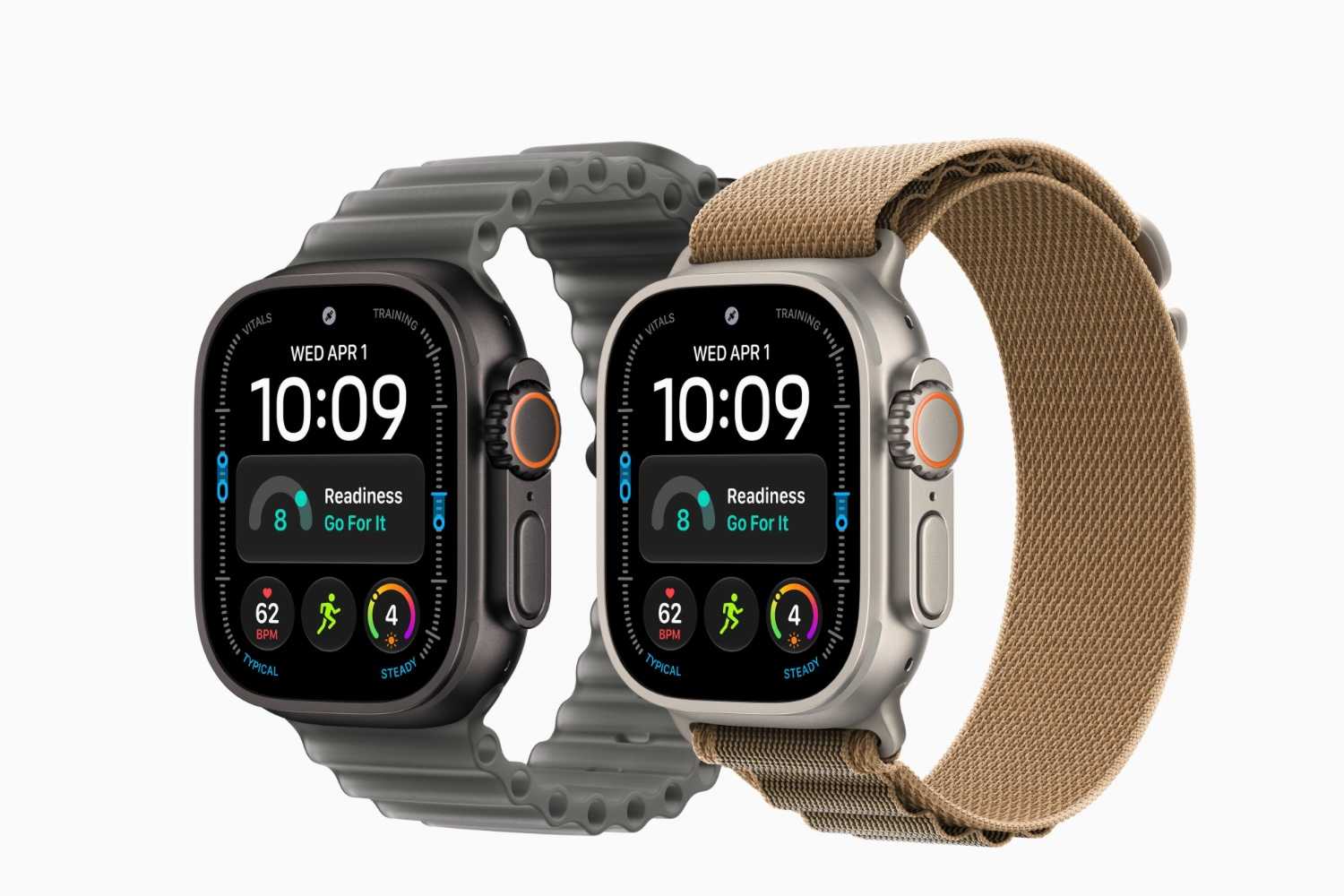
That additional data powers another major addition: Readiness, which gives users a 0–10 score based on recent activity, sleep, vitals and recovery data, and updates during the day. Both watches also use Apple’s new S11 chip, which enables Siri AI and a collection of Audio Intelligence features including Sound Recognition, faster Shazam, Live Rewind and Siri Recap. Live Rewind and Siri Recap are not available yet. Apple says both will arrive as beta features later in 2026, initially in English.
The most dramatic hardware improvement is reserved for the Ultra 4: Apple has increased its normal-use battery-life rating from 42 hours to 50 hours, Low Power Mode from 72 to 84 hours, and introduced workout modes capable of tracking for up to 45 hours. Series 12 remains rated at 24 hours, although our testing found inconsistent battery life and charging performance, while the aluminium Series 12 gains tougher Ceramic Shield 2 and Apple has brought back a premium ceramic Apple Watch for the first time in years.
The five biggest Apple Watch upgrades for 2026
- New Health Sensing System with substantially more frequent heart-rate and HRV monitoring.
- Readiness score for daily recovery and training guidance.
- S11 chip, Siri AI and Audio Intelligence, including Siri Recap and Live Rewind, which are both coming in a later software update.
- Much longer Ultra 4 battery life, rising from 42 to 50 hours, with up to 45 hours of extended workout tracking.
- New materials and durability, including Ceramic Shield 2 on aluminium Series 12 and the return of ceramic Series 12 models.
The rumours were broadly right that this wouldn’t be a major redesign, and also correctly predicted the emphasis on health, Siri AI and ceramic materials. However, rumours of Touch ID have not materialised, there is still no blood-glucose sensor, and the Series 12 hasn’t gained longer quoted battery life despite speculation about a larger battery. Starting prices are unchanged, although the 46mm Series 12 costs more.

Your watch knows how you are feeling. Do you?
Apple
Apple Watch Series 12 and Ultra 4: Top 10 features
| Feature | Apple Watch Series 12 | Apple Watch Ultra 4 |
|---|---|---|
| Health Sensing System | New optical/electrical sensors | Same new system |
| Background heart rate | Every 5 seconds | Every 5 seconds |
| HRV | As often as every 5 minutes | As often as every 5 minutes |
| Readiness score | Yes | Yes, with training data |
| Processor | S11 | S11 |
| Siri AI | Yes | Yes |
| Audio Intelligence | Supported; Live Rewind and Siri Recap await an English-language beta later in 2026 | Supported; Live Rewind and Siri Recap await an English-language beta later in 2026 |
| Display | 42mm/46mm, up to 2,000 nits | 49mm, up to 3,000 nits |
| Battery | Up to 24 hours; 38 hours Low Power | Up to 50 hours; 84 hours Low Power |
| Satellite | No direct satellite communications | Emergency SOS and Find My via satellite |
Apple Watch Series 12 and Ultra 4 release date and availability
Apple announced the Apple Watch Series 12 and Ultra 4 on September 9, 2026. Both models went on sale on September 18 and are available from Apple, authorized retailers and participating carriers.
watchOS 27 was released on September 14 for compatible existing Apple Watches.
Both watches are available now, including in the U.S., U.K., Australia, Canada and more than 50 other countries and regions.
You can buy them directly from Apple through Apple.com, the Apple Store app and Apple retail stores. They are also available through Apple-authorised retailers and, in the case of cellular models, participating mobile networks.
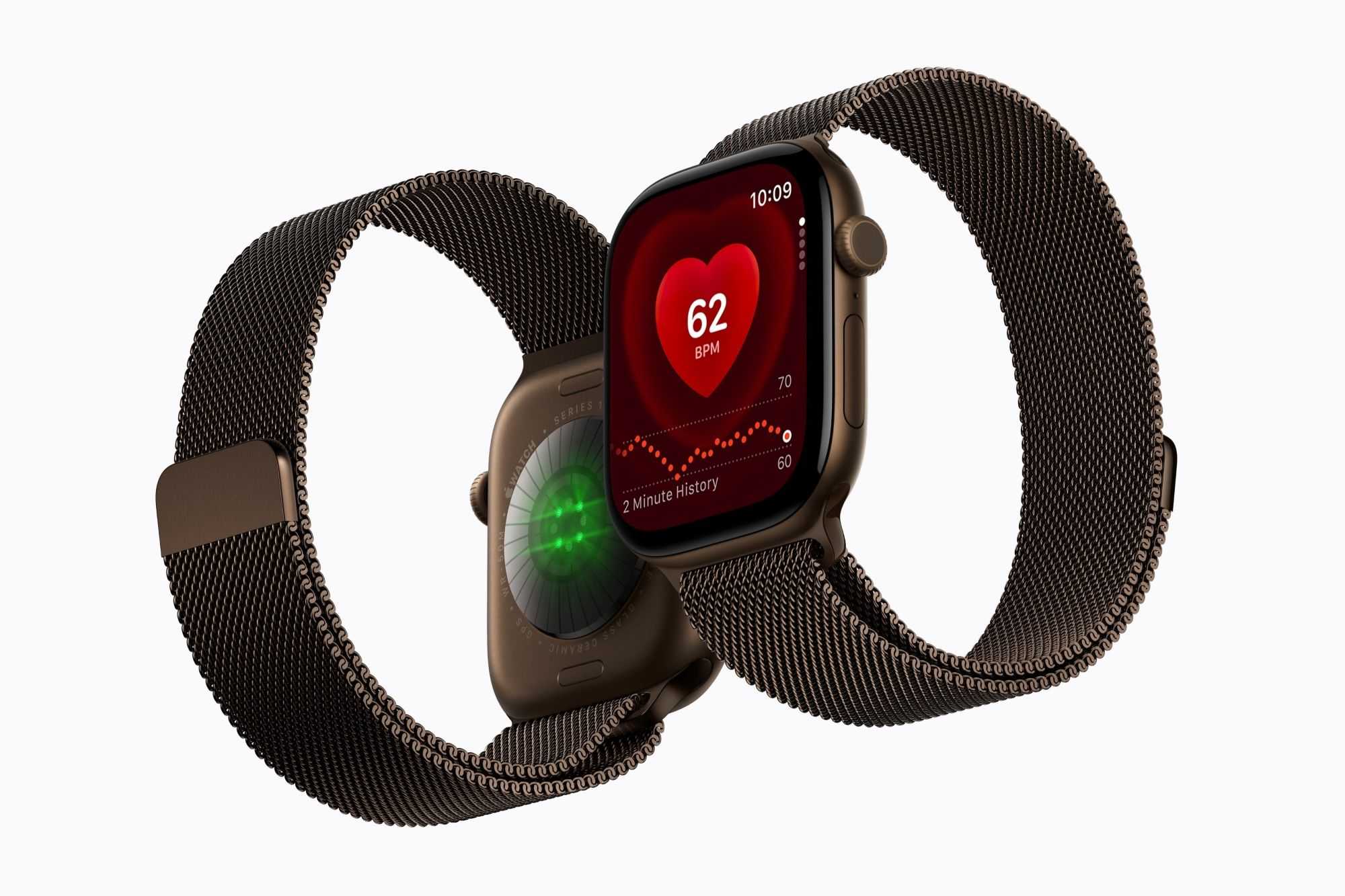
Apple Watch Series 12 design
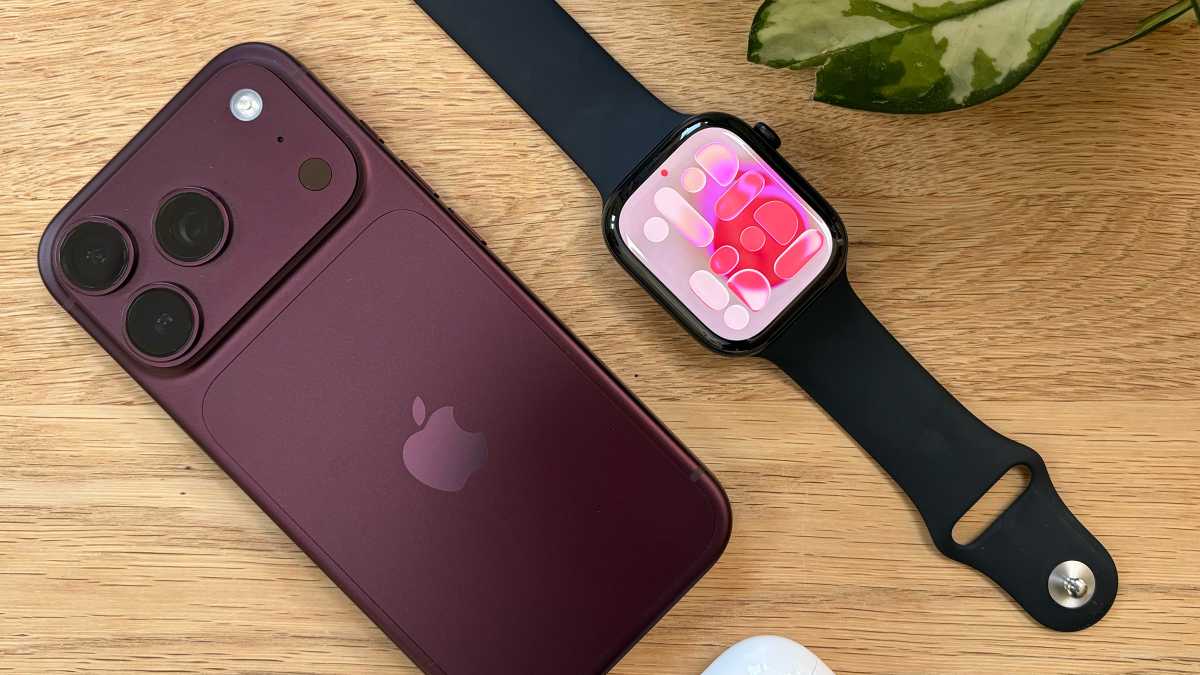
The Apple Watch Series 12 in bronze.
David Price / Foundry
The Series 12 does not represent a major external redesign, as the pre-launch rumours suggested. It retains Apple’s familiar rounded-square design and comes in 42mm and 46mm sizes.
Interestingly, the aluminium and titanium cases are fractionally wider than Series 11. The 46mm model measures 46 x 40 x 9.7mm, compared with 46 x 39 x 9.7mm for Series 11. The 42mm version measures 42 x 37 x 9.7mm, compared with 42 x 36 x 9.7mm previously. The screen resolutions remain 416×496 pixels and 374×446 pixels respectively.
Apple continues to offer aluminium and titanium models, but ceramic has returned as a premium case option. Ceramic models are fractionally larger and thicker, measuring 43mm or 47mm tall and 9.85mm thick.
The finishes are:
- Aluminium: Dark Bronze, Light Gold, Black and Space Grey
- Titanium: Radiant Gold and Natural
- Ceramic: Pearl White and Night Blue
The ceramic options confirm one of the more interesting pre-launch rumours, although Apple opted for Night Blue rather than the dark grey that had also been indicated.
The Series 12 display remains a wide-angle LTPO3 Always-On Retina OLED with up to 2,000 nits brightness. Aluminium models now use Ceramic Shield 2, which Apple says is 60 percent tougher than the Ion-X glass used on Series 11. Titanium and ceramic versions use sapphire crystal.
Apple Watch Ultra 4 design

The rugged Apple Watch Ultra 4.
Apple
The Ultra 4 changes even less externally. It remains a 49mm Grade 5 titanium watch, measuring exactly 49 x 44 x 12mm, with the same 422×514-pixel display and 1,245 sq mm display area as Ultra 3.
It comes in the familiar Natural Titanium and Black Titanium finishes and retains its flat sapphire crystal display, raised protective case edges, prominent Digital Crown and orange-accented Action button.
The Ultra 4 is slightly heavier, however: 63.0g in Natural and 63.1g in Black, compared with 61.6g and 61.8g respectively for Ultra 3.
The display remains a wide-angle LTPO3 Always-On Retina display capable of 3,000 nits, so there is no headline screen-brightness upgrade.
Apple hasn’t introduced the rumoured Touch ID fingerprint sensor on the 2026 Apple Watch models.
What about the buttons and controls?

The side button.
Apple
The physical control layout is essentially unchanged.
Series 12 has:
- Digital Crown with haptic feedback
- Side button
- Strap-release buttons
Ultra 4 adds the familiar:
- Customisable Action button
- Larger protected Digital Crown
- Side button
The Action button can start workouts, mark segments, move to the next interval, activate the torch and perform other user-selected actions.
There is, however, a new single-tap finger-and-thumb gesture in addition to Double Tap and Wrist Flick, providing another way to interact without touching the display.
Apple Watch Series 12 and Ultra 4 processor: What processor do they use?
Both watches use Apple’s new S11 chip, replacing the S10 used by Series 11 and Ultra 3.
Apple’s specifications list:
- 64-bit dual-core processor
- 4-core Neural Engine
- 64GB storage
- Secure hardware for Audio Intelligence processing
The S10 also had a 64-bit dual-core CPU, four-core Neural Engine and 64GB of storage, so the headline specifications alone don’t reveal how much faster S11 actually is. Apple calls it its “most powerful wearable chip”, but notably hasn’t provided a percentage CPU or GPU performance improvement over S10, and its technical specifications don’t list a separate GPU core count.
That means the more important S11 improvements appear to be what the chip enables rather than raw benchmark performance.
It works with the new Health Sensing System, supports Siri AI and powers the new Audio Intelligence functionality. Apple has also emphasised efficiency, particularly in relation to higher-frequency sensor readings and Ultra 4’s improved battery life.
The new Audio Intelligence system includes a Secure Exclave, a hardware-isolated area of the S11 that processes audio separately and deletes raw audio immediately after processing.
2026 Apple Watch connectivity
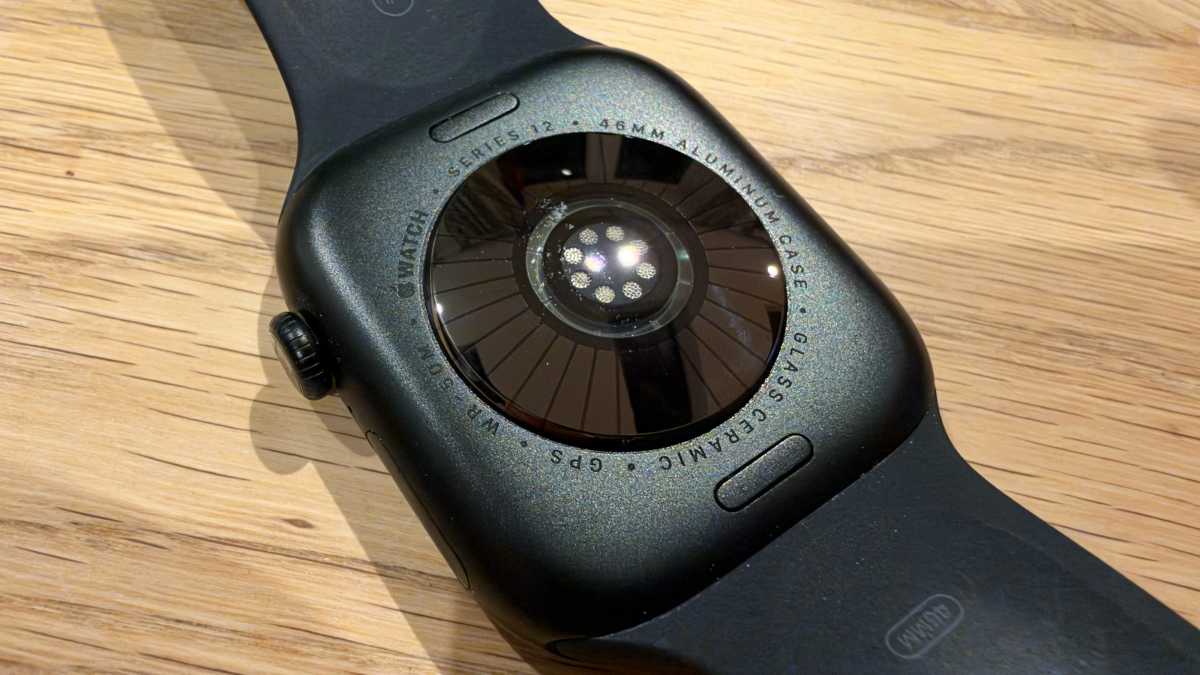
David Price / Foundry
Connectivity changes are modest. Cellular Series 12 and Ultra 4 models support 5G RedCap and LTE, as did their predecessors, with no newly branded Apple-designed modem.
Both watches also support Wi-Fi 4 (802.11n) on 2.4GHz and 5GHz, Bluetooth 5.3, and Apple’s second-generation Ultra Wideband chip. Wi-Fi 4 may sound dated, but Apple Watch relies mainly on Bluetooth and has relatively low data requirements.
Satellite connectivity
Satellite communications remain a major distinction between the Series and Ultra families.
Apple Watch Series 12 doesn’t have built-in satellite connectivity.
Ultra 4 does, supporting Emergency SOS via satellite and Find My location sharing via satellite when cellular and Wi-Fi aren’t available.
This is broadly what had been expected before launch: satellite remains primarily an Ultra feature rather than migrating to the regular Series watch.
2026 Apple Watch battery and charging: What’s new?

Charging the Apple Watch.
Apple
Apple Watch Series 12
Apple rates Series 12 for:
- Up to 24 hours normal use
- Up to 38 hours in Low Power Mode
- Up to 10 hours of outdoor workout tracking
Those first two figures are unchanged from Series 11, so despite rumours that Apple was working on a larger battery, there is no increase in Apple’s quoted everyday battery life.
Apple claims improved endurance from a short charge.
Apple quotes the following charging figures for Series 12:
- 80 percent in around 30 minutes
- Up to 12 hours of use from a 15-minute charge
- Up to 10 hours of sleep tracking from five minutes of charging
Apple also rated Series 11 for an 80 percent charge in around 30 minutes, and up to eight hours of normal use from a 15-minute charge.
In our Apple Watch Series 12 review, we recorded 51 and 40 hours of battery life across two runs – an average of 45.5 hours, compared with 47.5 hours for Series 11. Charging also varied: our watch reached 58% and 72% after 30 minutes in separate tests, falling short of Apple’s claimed 80%. These results show that the Series 12 can comfortably exceed Apple’s 24-hour rating, but they don’t demonstrate a consistent improvement over Series 11. Actual battery life depends on usage.
Apple Watch Ultra 4
Battery life is one of Ultra 4’s biggest upgrades.
Apple rates it for:
- 50 hours normal use, up from 42 hours
- 84 hours Low Power Mode, up from 72 hours
- 18 hours standard outdoor workout tracking
- 25 hours Extended Workout
- 45 hours Max Extended Workout
Apple says the Extended Workout figure represents a 25 percent increase over the previous generation.
Apple says Ultra 4 can reach 80 percent in around 45 minutes, but 15 minutes of charging now provides up to 18 hours of use, versus 12 hours on Ultra 3.
Apple also credits more efficient workout algorithms with helping deliver the longer endurance.
Apple Watch charging
Both models use Apple’s magnetic fast-charging system with the Apple Watch Magnetic Fast Charger to USB-C Cable.
There is no conventional wired charging port on either watch and no change to the basic magnetic charging system this year.
Apple Watch Series 12 and Ultra 4 price
Apple has kept its entry prices unchanged in both the U.S. and U.K. – contrary to pre-event speculation that the Series 12 could increase in price.
| Model | 2026 price | Previous generation |
|---|---|---|
| Series 12 – U.S. | 42mm $399 / 46mm $449 | Series 11: 42mm $399 / 46mm $429 |
| Series 12 – U.K. | 42mm £369 / 46mm £419 | Series 11: 42mm £369 / 46mm £399 |
| Ultra 4 – U.S. | From $799 | Ultra 3: $799 |
| Ultra 4 – U.K. | From £749 | Ultra 3: £749 |
Series 12 pricing varies considerably depending on case material. Aluminium is the entry-level option, while titanium costs more and the newly revived ceramic models occupy the premium end of the range.
Starting prices are unchanged, but the larger Series 12 costs more. The 46mm aluminum model starts at $449/£419 with GPS or $549/£519 with cellular—an increase of $20/£20 over the equivalent Series 11 models.
Should you buy Apple Watch Series 12 or Ultra 4?

Apple
Apple Watch Series 12 is the best choice for most people. It offers essentially all of Apple’s important new features – including the new Health Sensing System, Readiness, frequent HRV measurements, Siri AI and Audio Intelligence – in a considerably smaller and cheaper watch. (Live Rewind and Siri Recap are not available yet.)
However, our Series 12 review found inconsistent battery life and charging, along with occasional sluggishness. These observations may not reflect an established problem affecting every watch, but they temper our recommendation, particularly for owners of recent models considering an upgrade.
The strongest reason to choose Ultra 4 is battery life. IIts increase in Apple’s rated battery life from 42 to 50 hours makes it much more practical for people who regularly spend more than a day away from a charger, while the new 25- and 45-hour extended workout modes make it substantially more appealing to runners, hikers, cyclists and endurance athletes.
Ultra 4 is also the better choice for outdoor adventurers because of its brighter 3,000-nit display, dual-frequency GPS, rugged titanium construction, Action button, 100m water resistance, recreational diving support and satellite communications. Series 12 is the better everyday watch: lighter, less bulky, available in two sizes and substantially cheaper.