- Judge ruled using a month of ALPR history without a warrant was unconstitutional.
- More than 50 records tracked one vehicle across multiple states.
- The investigation resulted in the seizure of 91 pounds of methamphetamine.
Automated license plate readers have become a common sight across America. They record passing vehicles and build enormous databases of where they’ve been. Now, a federal circuit judge in Oklahoma has ruled that a certain case involving the use of a month’s worth of ALPR data tracking without a warrant violated the Fourth Amendment. She went as far as to describe the technology involved as a form of “indiscriminate mass surveillance.” It’s a key ruling but won’t automatically kill cameras overnight.
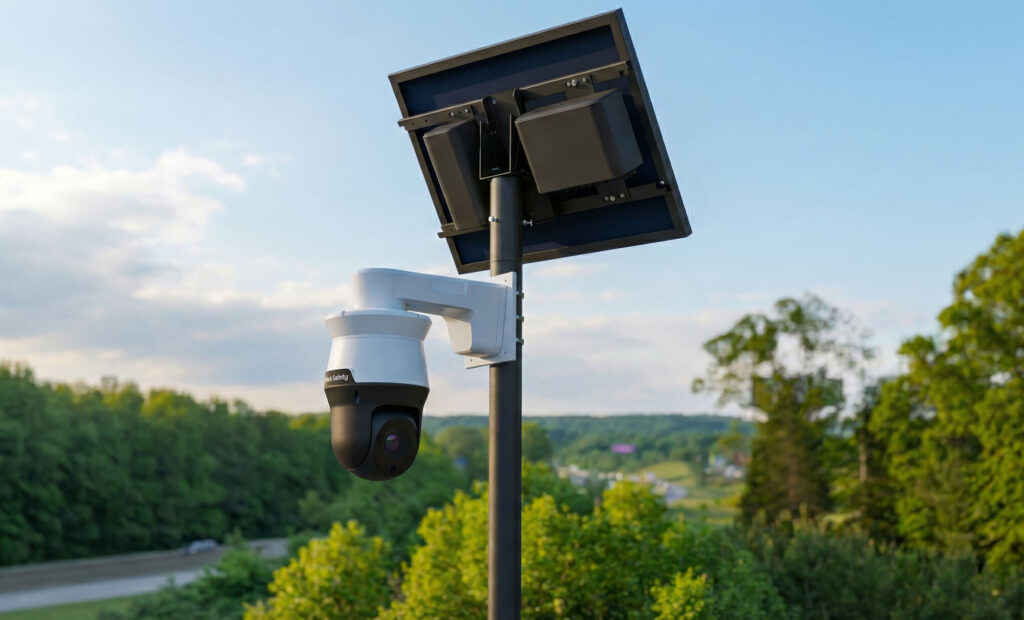
Initially, it sounds like a potentially devastating ruling for Flock Safety, which operates one of the country’s largest ALPR networks. However, there are two important caveats. First, this is a district court ruling tied to one criminal case. Second, it’s not a nationwide ban or binding precedent for other courts. Perhaps most importantly in the end, the judge’s reasoning wasn’t limited to Flock.
More: Researcher Maps 300,000 Flock Devices, Then Flock Tries To Take It Down
The case involves Melisa Kyle, who was driving a Mazda SUV through Oklahoma when Tulsa County Deputy Sheriff Freddie Alaniz spotted its California license plate. According to U.S. District Judge Sara Hill, Alaniz began following the Mazda “for no apparent reason other than” its California plate. He also searched the plate using ALPR systems available to him. At that point, the court found that all Alaniz knew was that the vehicle wore California plates.
The search revealed a recent trip toward the California-Arizona border and back toward Missouri. Alaniz subsequently stopped Kyle for traffic violations and questioned her about her travels while continuing to review ALPR records. After Kyle refused consent to search the Mazda, a police dog was deployed. Officers ultimately discovered 91 pounds (41 kg) of methamphetamine. That sounds like a significant bust. The problem was how police got there.
Hill found the initial traffic stop itself justified. Moving violations are legitimate reasons for a stop, but she then ruled that Alaniz lacked reasonable suspicion to extend it. She separately found his use of the historical ALPR databases to be an unconstitutional warrantless search. That’s the real key here. The scale of the available tracking appears to have been crucial.
Alaniz could access at least 30 days of vehicle-location information from multiple states. His search returned more than 50 records documenting Kyle’s vehicle over the course of a month. Hill acknowledged that people generally don’t have an expectation of privacy simply driving down a public road. What troubled the court was the ability to aggregate countless observations into a searchable history of someone’s movements.
“This is a type of indiscriminate mass surveillance,” Hill wrote, noting that ALPR networks continuously collect information on vehicles regardless of whether their drivers are suspected of committing a crime. The court ultimately ordered the evidence obtained after the ALPR search suppressed.
This Isn’t A Nationwide Ban


Before anyone starts tearing Flock cameras off poles, this decision has some serious limitations. Hill is a federal district judge in the Northern District of Oklahoma. Her ruling doesn’t suddenly make ALPR searches unconstitutional nationwide, and she acknowledged that nearly every court that previously examined the issue has reached the opposite conclusion.
Several other federal courts in Oklahoma have ruled that ALPR use does not constitute a Fourth Amendment search. Flock similarly stressed that point, telling 404 Media that it was not a party to the case and arguing that the decision runs contrary to other rulings. The company expects the decision to be appealed and overturned. Still, the implications could eventually extend far beyond one company.
While Flock gets most of the attention surrounding ALPRs, it isn’t alone. Companies including Motorola Solutions, Genetec, Rekor, Axon, and Leonardo also offer license plate recognition technology. More importantly, Hill’s opinion discusses the constitutional issue largely in terms of ALPR technology, rather than declaring one particular company’s hardware unconstitutional.
That’s key because if the court’s interpretation eventually becomes widely accepted by appellate courts, replacing Flock with a different ALPR brand wouldn’t fly. Any sufficiently broad ALPR network capable of producing comparable historical location data could potentially face the same Fourth Amendment questions.
For now, though, that’s a very big if. One federal district judge has drawn a constitutional line that other courts largely haven’t. What happens if higher courts begin drawing it in the same place is where things could get very interesting.