FROM NAPOLEON’S PARIS TO A BRITISH HOTEL
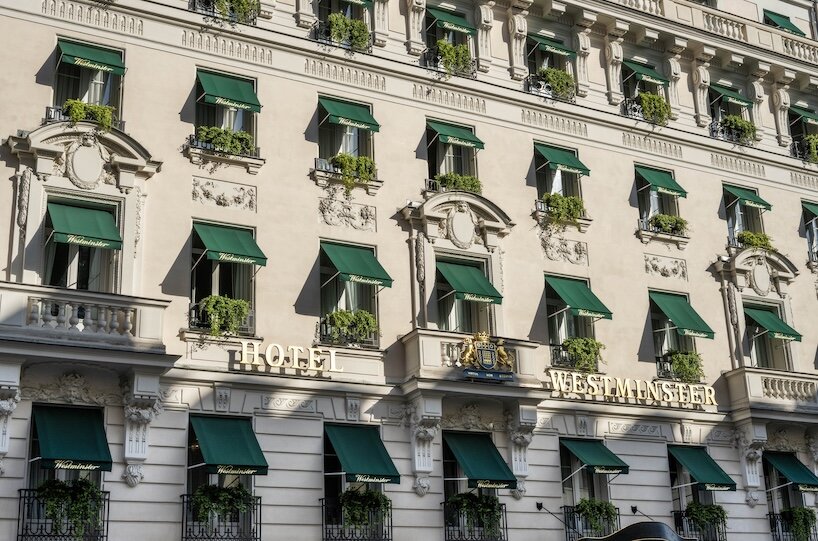
In a city with no shortage of historic hotels, Hotel Westminster has had more than two centuries to develop its identity. Located at 13 rue de la Paix, between Place Vendôme and the Palais Garnier, the Parisian address has undergone an extensive restoration led by interior architect Laurent Maugoust, with British designer Helen Stephens reimagining its restaurant, Le Céladon. The project, completed one year ago, preserves architectural elements accumulated throughout the building’s history while introducing contemporary interiors. Awarded its fifth star in 2025, the Westminster enters its latest chapter with a rather unusual distinction: a distinctly British character in one of the most recognizably French corners of Paris.
The story begins in 1802, when Napoleon Bonaparte ordered the sale of land belonging to a former Capuchin convent and commissioned architects Percier and Fontaine to develop a new district. The street, originally named rue Napoléon before becoming rue de la Paix in 1814, welcomed the Hôtel Wagram in 1807, the predecessor of today’s Westminster. As British travelers increasingly settled in the neighborhood, the area acquired the reputation of being a small piece of London in Paris, an identity reflected in the hotel’s eventual name. The building itself continued to evolve through successive extensions and renovations, most notably between 1905 and 1907, when architect Jacques Marcel Aubertin gave it the Haussmannian silhouette it retains today.
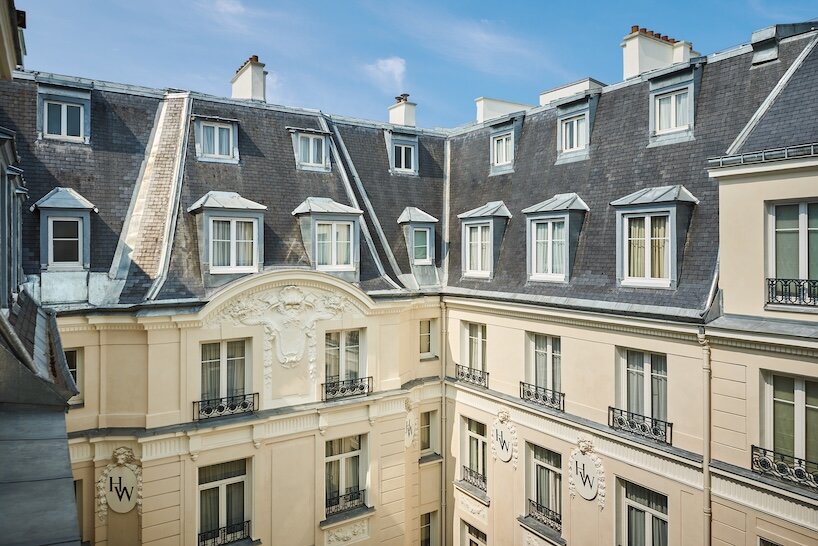
LAURENT MAUGOUST RESTORES HAUSSMANNIAN INTERIORS
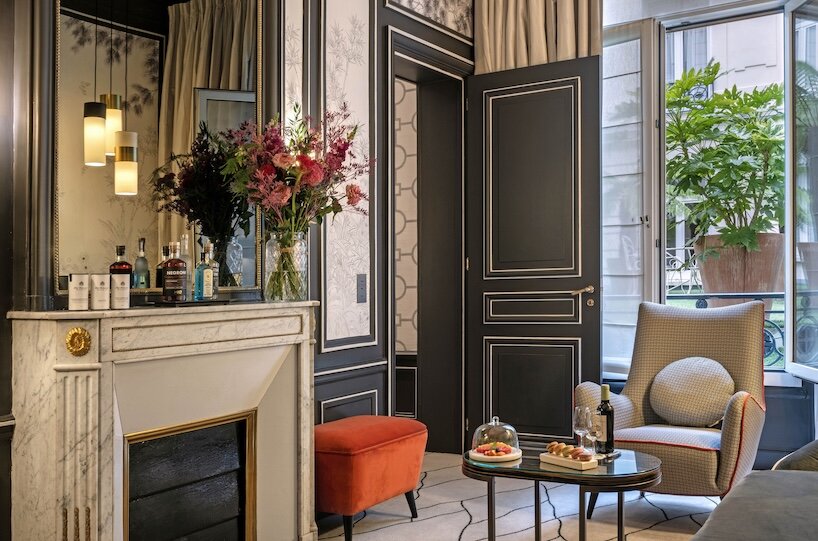
For Laurent Maugoust, the restoration involved working with architectural elements belonging to different periods rather than recreating a single historical moment. Across the hotel’s 102 rooms, including 20 suites, the intervention preserves marble fireplaces, decorative mouldings and herringbone oak parquet floors, combining them with contemporary furnishings and textiles in shades of beige, green and violet. The designer’s approach draws on his experience with Haussmannian interiors, where proportions, materials and craftsmanship establish a continuity between past and present. ‘I set out to reinterpret its style by bringing different eras into dialogue,’ Maugoust explains, describing a project that builds on the existing architecture rather than attempting to replace it.
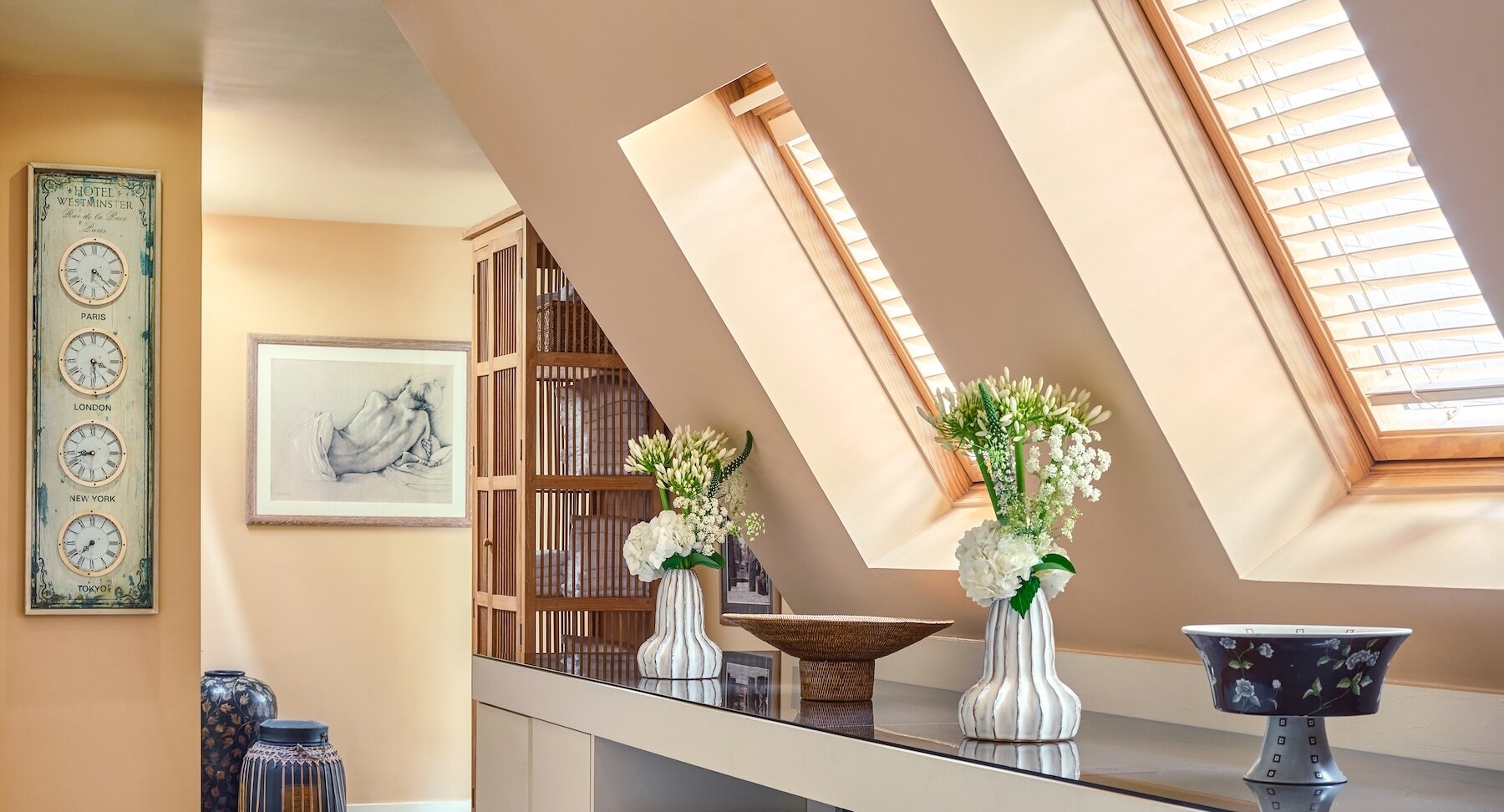
Other details reveal how the Westminster has accumulated its own collection of objects and decorative elements over the decades. Antique clocks, some dating from the 19th century, remain scattered throughout the rooms and suites, alongside paintings, historical photographs and furnishings associated with the property’s past. Some suites overlook rue de la Paix, while others face a flower-filled inner courtyard, offering two rather different perspectives on central Paris. These surviving features also reflect the building’s long history of transformation, from its early extensions to the reconstruction that established its present appearance. At the Westminster, even the supposedly timeless Haussmannian setting has undergone more than a few changes.
DUKE’S BAR PRESERVES THE HOTEL’S BRITISH HERITAGE
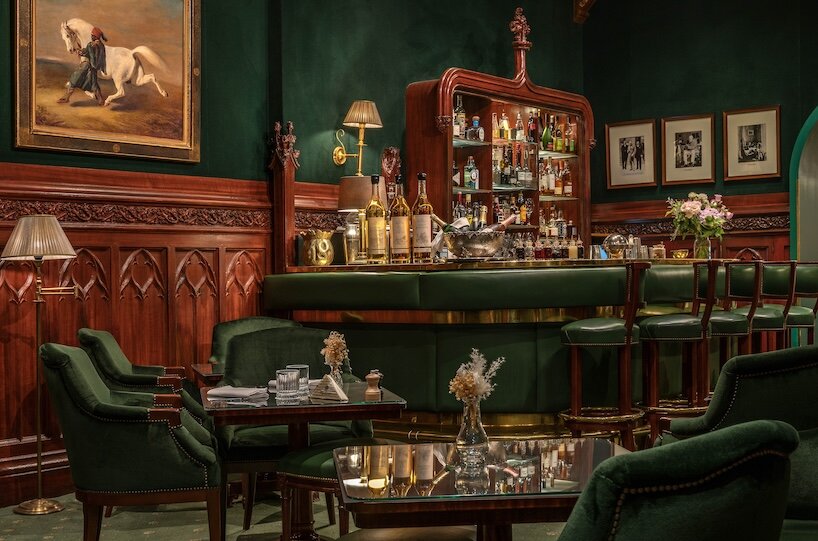
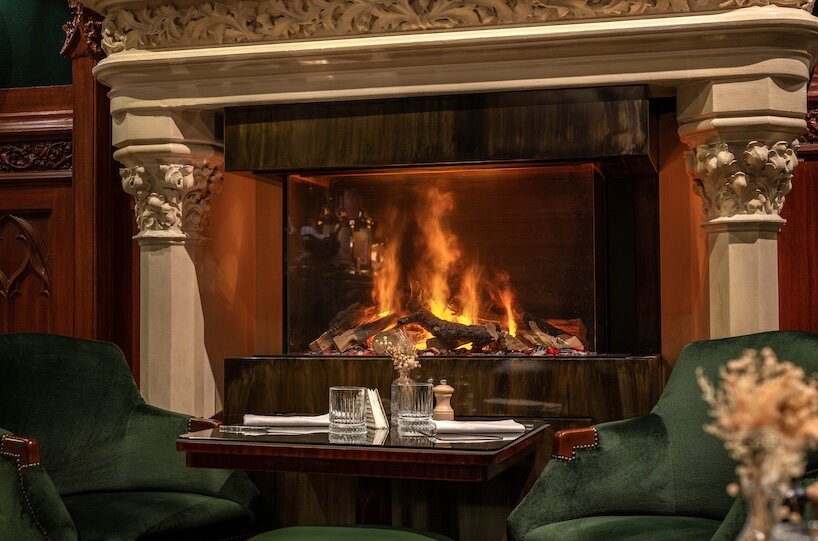
The hotel’s most recognizable connection to Britain survives at Duke’s Bar, an English-club-inspired interior defined by dark wood panelling, deep armchairs, subdued lighting and an original fireplace. During the 1920s, the bar became a gathering place for British aristocrats and political figures, later attracting writers and personalities from Parisian cultural life. According to the hotel’s historical account, Winston Churchill was among its regular visitors, while Coco Chanel, Agatha Christie, Arthur Conan Doyle and Françoise Sagan also frequented the address. Black-and-white portraits of Churchill, Chanel, Rudyard Kipling and the Duke of Westminster now line the walls, preserving something of the atmosphere that once made the bar a meeting point between British and French society.
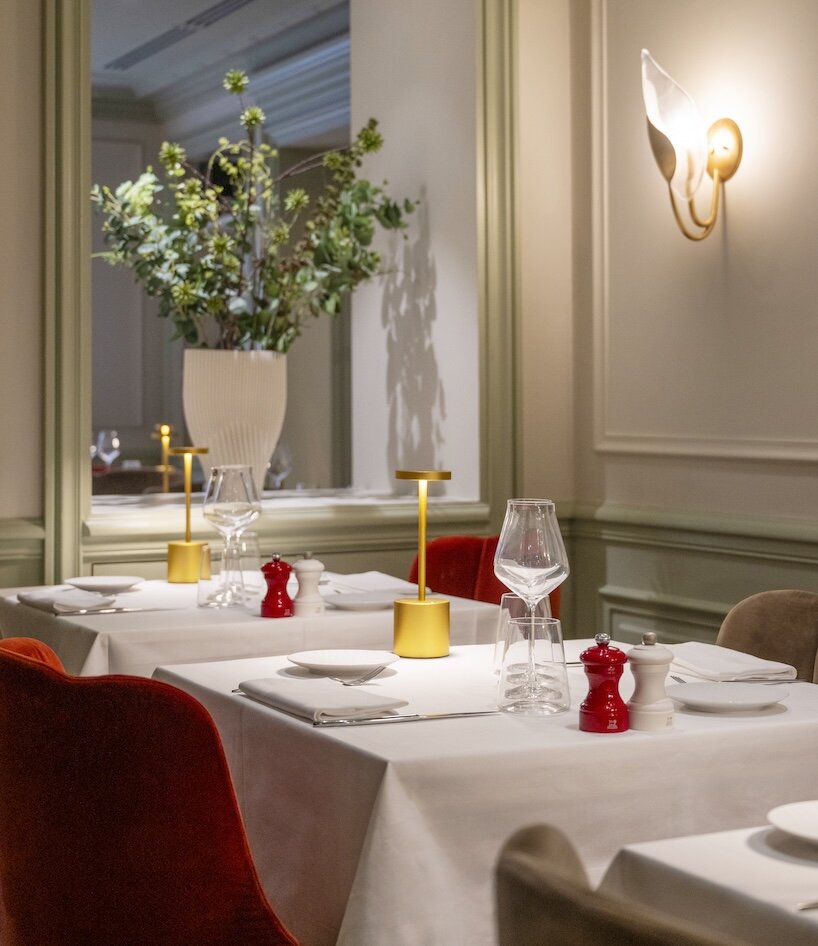
A different interpretation of the hotel’s history unfolds at Le Céladon, redesigned by Helen Stephens to establish a visual connection with Duke’s Bar. Shades of green reference both the bronze of the Vendôme Column and the foliage of the nearby Tuileries Garden, bringing elements of the surrounding city into the restaurant’s interiors. Beyond the dining spaces, the Westminster continues its relationship with Parisian cultural life through musical evenings and literary events organized in collaboration with Galignani, the city’s historic English-language bookshop. More than two centuries after the first hotel opened on rue de la Paix, the Westminster remains a curious meeting point between Parisian architecture and British tradition, two identities that have become difficult to separate.
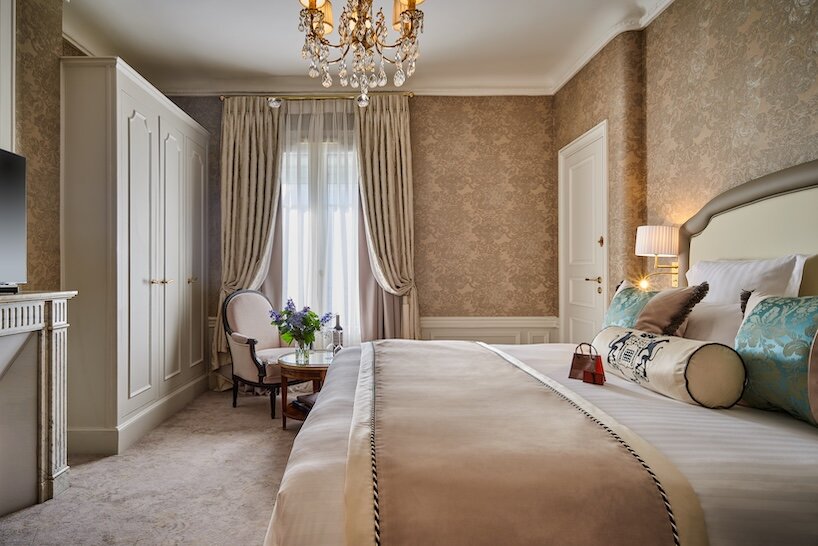
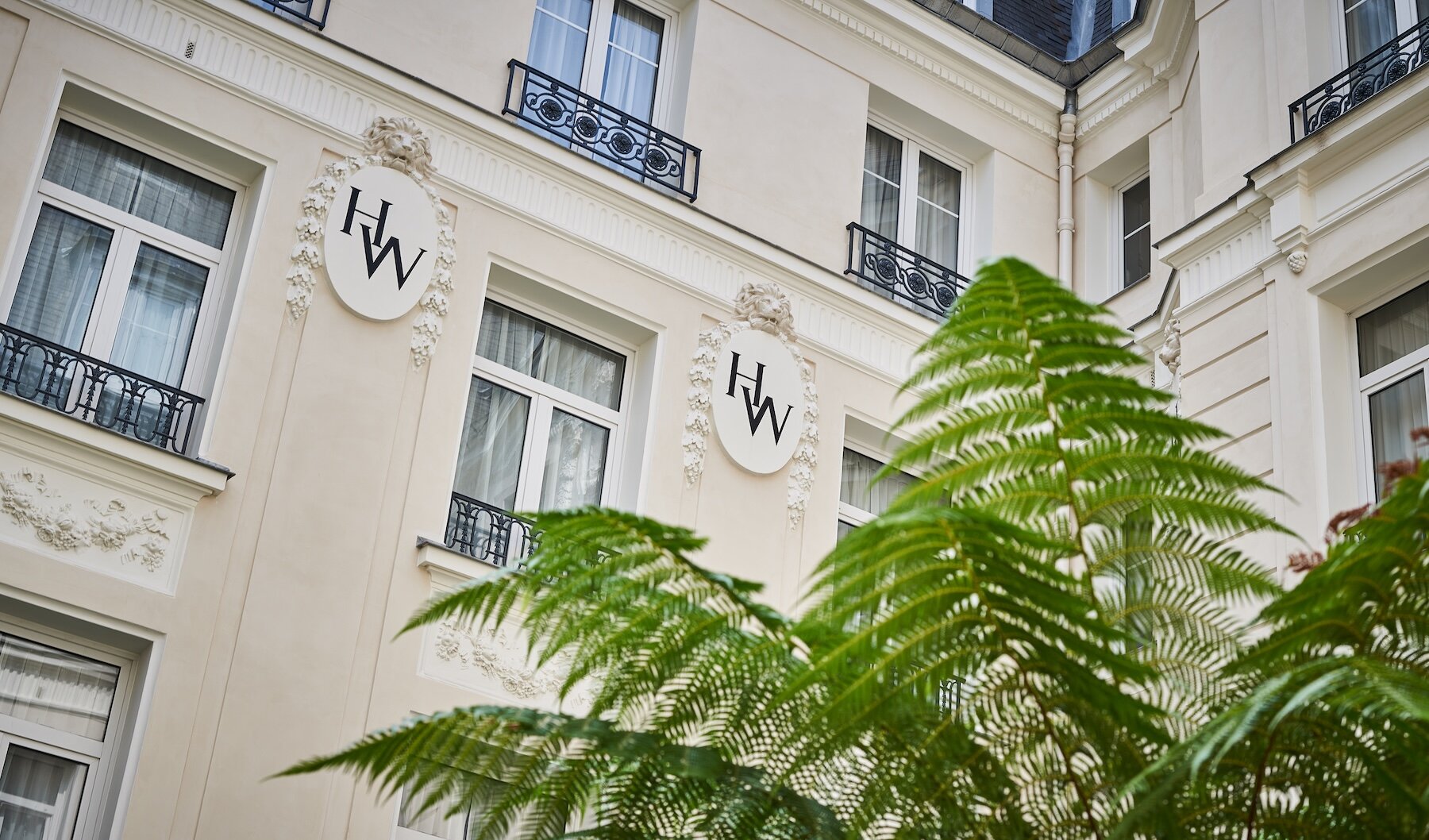
the renovation preserves the hotel’s original character while introducing modern touches
a dedicated fitness space complements the hotel’s guest facilities
project info:
name: Hôtel Westminster Paris | @hotel_westminster
designers: Laurent Maugoust and Helen Stephens | @maugoust_chenais
location: Paris, France
The post inside the parisian hotel renovation where british club culture meets haussmannian architecture appeared first on designboom | architecture & design magazine.