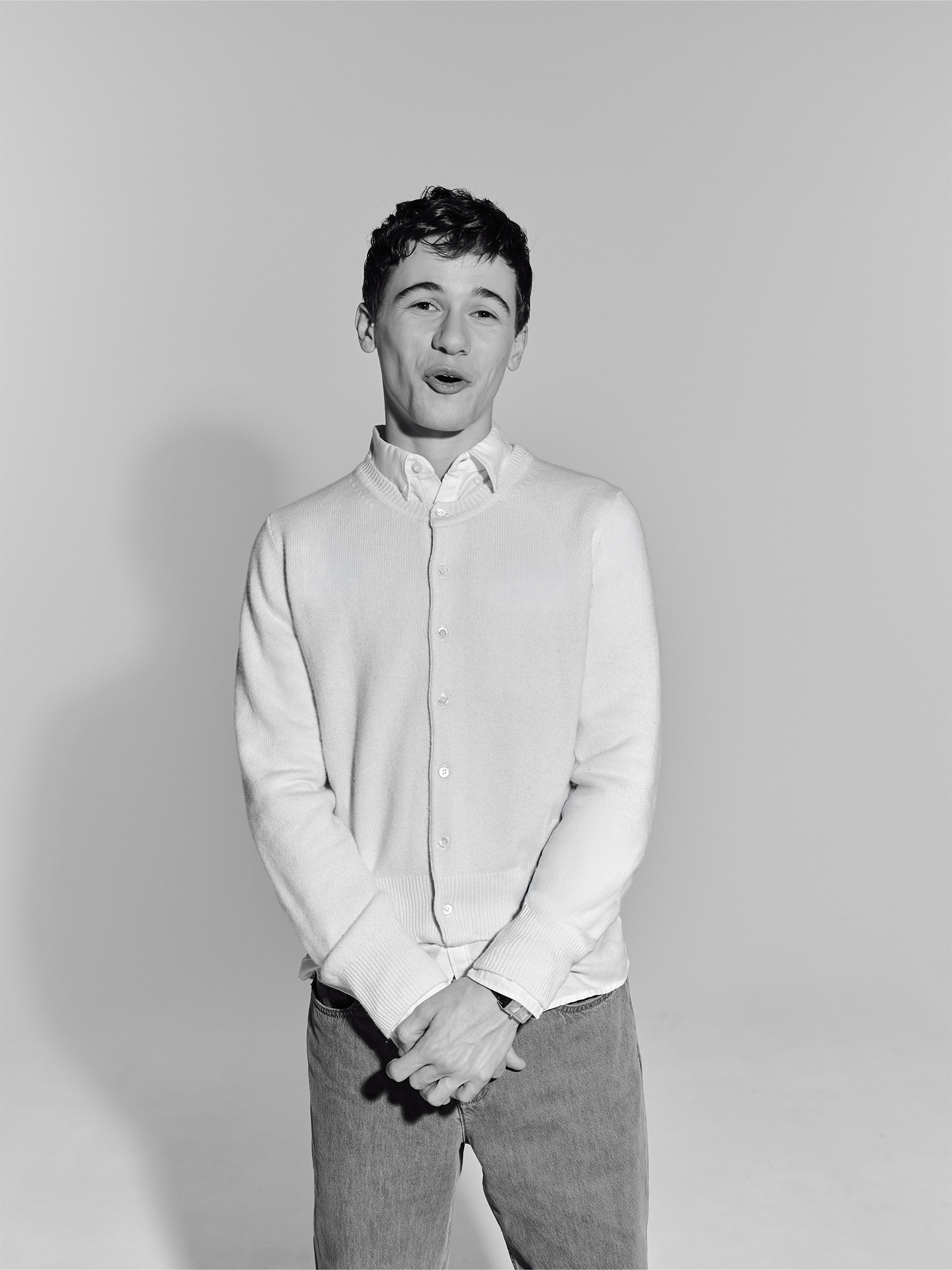
Long before Sam Nivola was the breakout of season 3 of The White Lotus (as the impressionable youngest member of the wealthy Ratliff family), he was an aspiring filmmaker growing up in the Brooklyn indie scene. His parents, Alessandro Nivola and Emily Mortimer, both had successful careers in front of the camera, but the young Nivola was more interested in working behind it, producing, writing, and directing his own work. That was until acclaimed director Noah Baumbach discovered Sam in high school and cast him alongside Adam Driver and Greta Gerwig in White Noise. Wanting to impress Baumbach, one of his idols, Sam got serious about his acting pursuit. What has followed since is a series of notable coming-of-age roles.
At 23, Nivola is in a position most young actors only dream of. He’s already worked with Hollywood royalty—Baumbach! Mike White! Bradley Cooper! Nicole Kidman!—nabbed a Dior ambassadorship, and launched his own production banner, Cold Worm, with his best friends. While enjoying a rewarding and fulfilling career on-screen, he’s simultaneously creating a burgeoning one behind it. At the center of it all is original, interesting storytelling.
His latest project, the Hulu dark comedy Phony, further proves Nivola’s project-picking prowess. From creator and writer Nick Paley, Phony follows high school student Sonny Cooke (Nivola) after a serious car accident. He is convinced his mother and closest confidant, Elle (a fantastic Connie Britton), has been replaced by an imposter who looks and sounds eerily like his mother. The mystery is unlike anything else on TV right now, which, in today’s age of IP obsession, is a massive compliment. As he’s the lead of the show, the stakes were high for the actor, but it was exactly the kind of role Nivola was looking to sink his teeth into post–White Lotus.
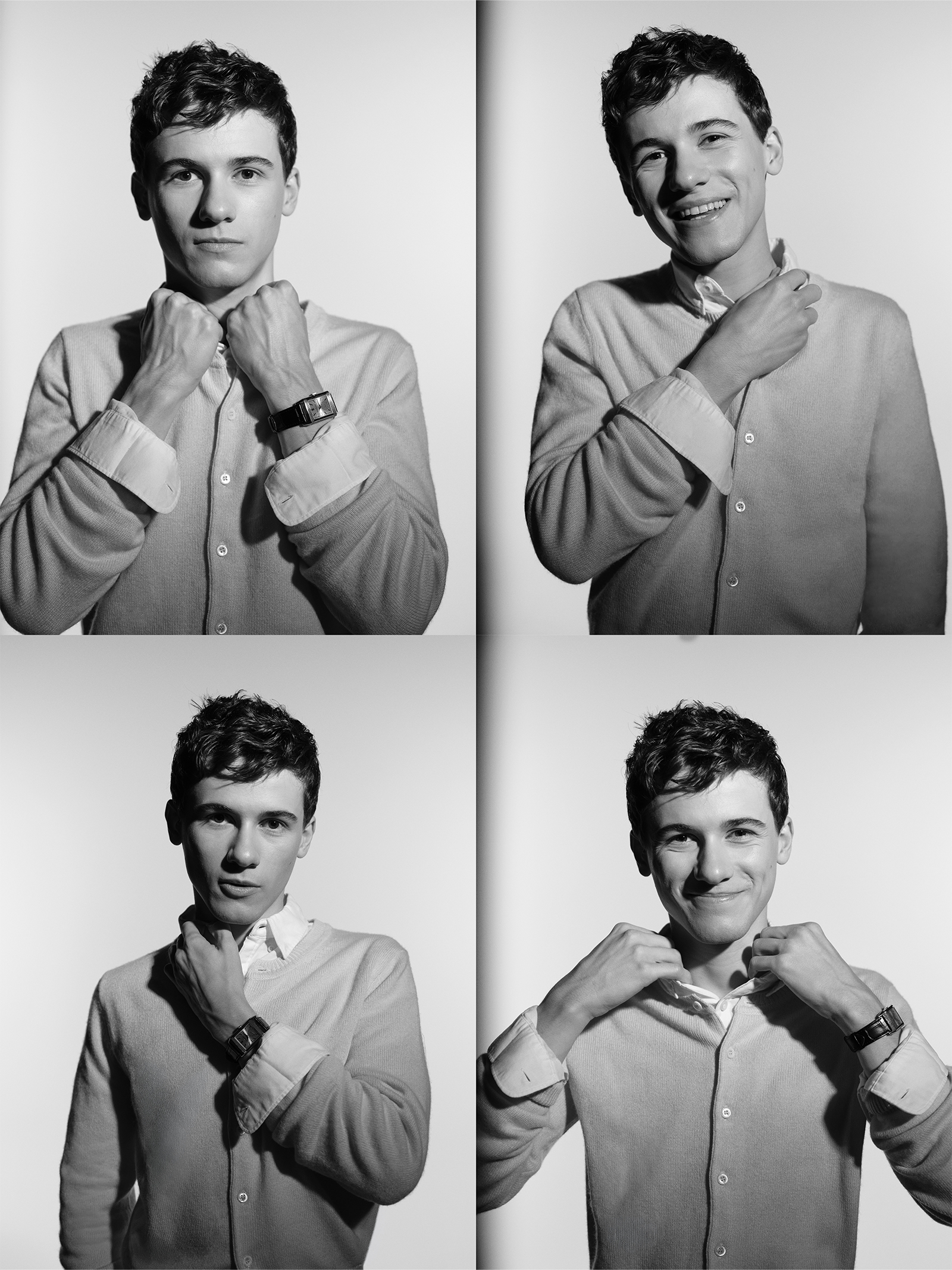
You are from an acting family, but when did performing become a serious pursuit for you?
I actually always wanted to be a filmmaker and a director, and I basically got an opportunity to audition for this movie White Noise, which I wound up booking. It was my first movie, directed by Noah Baumbach. He actually went to my high school, so they did a big casting call at the school. The reason I auditioned for that was because I wanted to meet Noah because he was such an idol. I wanted to be in the same room as this guy who made The Squid and the Whale, which is a movie about growing up in Brooklyn, which is right where I grew up. When I shockingly booked the role, I was like, “Now I have to get really serious about this because I don’t want to disappoint this guy who’s my hero.” I then got really into acting, and one thing led to another, and it was like, “Okay, I’m getting jobs.” Acting is amazing, and I really fell in love with it in its own right. It was just the most exciting thing ever to me. My parents really didn’t want me to [do it] because they are actors and they know how difficult it is, the ups and downs that can be so intense. … I was, I think, 17 or 18 when I started. It’s a scary line of work to get into, but eventually, they trusted me, and I went for it. I got really lucky.
What were the films or directors that were highly inspirational for you at a young age?
I mean, there’s [The 400 Blows]. There’s Bad Blood. Step Brothers for sure. Bad Blood is Leos Carax’s movie. I actually got to meet Leos when I was 18 and had a whole conversation with him where I was telling him how he changed my life. Adam Driver introduced him to me because they had just worked on a movie together, and then Adam started laughing, and I was like, “What are you laughing about?” And he was like, “He doesn’t speak fucking English.” My favorite movie of all time is Swingers by Jon Favreau, starring him and Vince Vaughn. It’s just a perfect movie. You can watch it in any mood and relate to it. I have a very broad taste in [movies]. It’s honestly rare that I don’t like a movie.
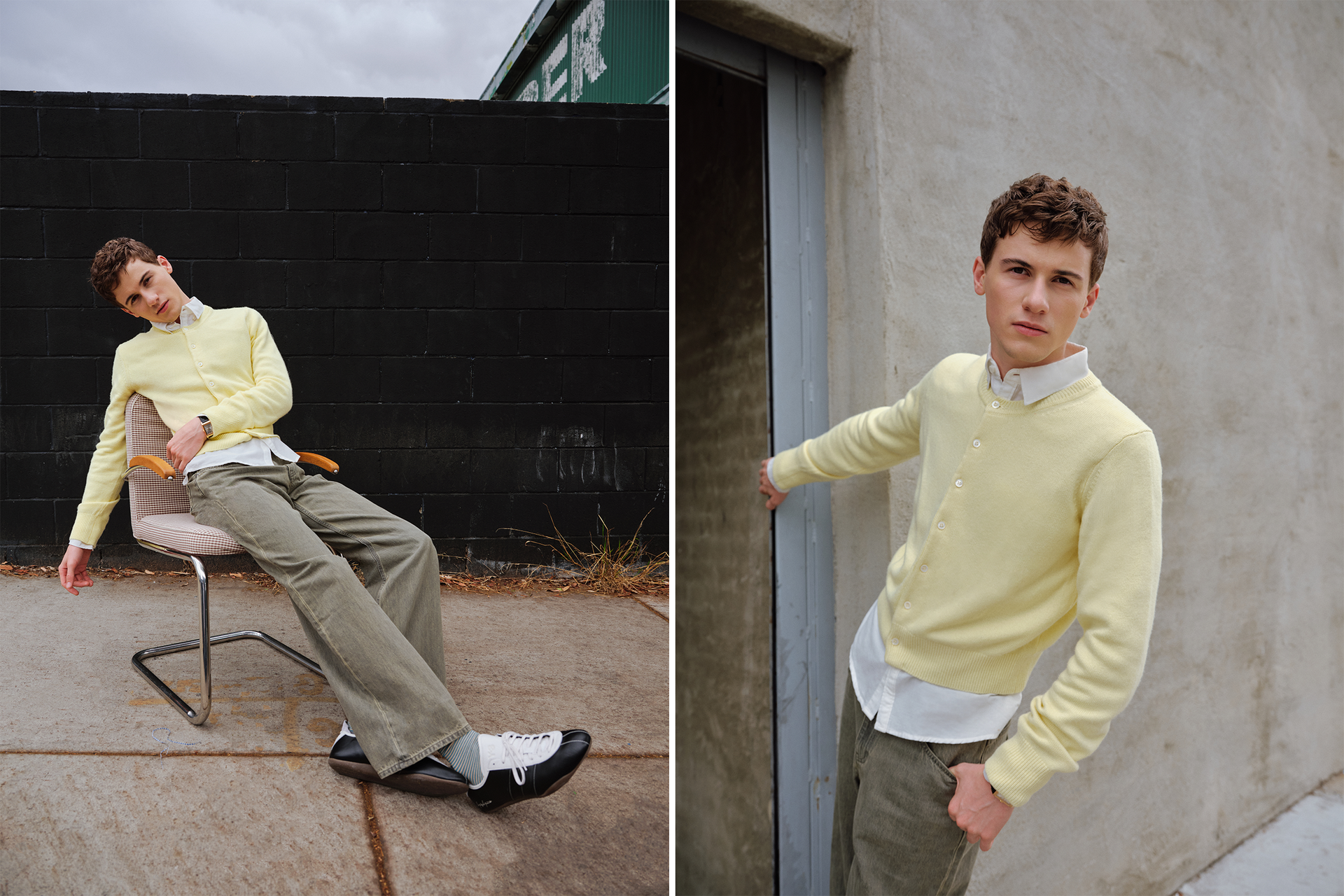
The White Lotus really is this launchpad for so many of its young actors. How have you felt the White Lotus effect since appearing?
It’s interesting. I’ve actually spoken to a lot of my costars and also people from previous seasons. It’s such a blessing because it launches you into the public eye, and that’s how you get work in this business. But it’s such a double-edged sword being thrust into the public eye because you suddenly are defined by that one role that you did.
There’s a beautiful freedom being completely unknown before The White Lotus. I was auditioning for every kind of role under the sun, and I was getting to be a real actor—not that I was booking anything, but I was able to be a real chameleon. In the year following the release of The White Lotus, people know you as one thing, and they can’t separate that from the fact that you’re an actor and that you can do anything. It’s only been recently, after it’s died down, that I’ve started to get more opportunities, and the opportunities have actually been better than they were before because, of course, I have taken part in this amazing show that people have now seen. It’s such a blessing to be in something successful because it gets you out there, but also, being out there solidifies you into a thing.
It’s a blessing and a curse.
Exactly.
Are you still close with your White Lotus family?
I’m so close with them. Sarah Catherine [Hook] lives in New York now, which is such a relief. I was always trying to convince her to move here. And Patrick [Schwarzenegger] is shooting something upstate right now, so he comes down on the weekends, and we get dinner. He’s lovely. Jason Isaacs is actually shooting something in the city right now. We’re all kind of here, and I was the only New Yorker when we went out to Thailand. Me and Walton Goggins and, I guess, Sam Rockwell. But yeah, they’re all amazing, and they really do feel like they’re my family now. I know that sounds so cheesy.
You have such a dynamic project list, spanning dark comedies, heady dramas, and rom-coms. And you’ve already worked with major directors, including Bradley Cooper, Noah Baumbach, and Mike White. Tell me a little bit about your project-picking philosophy.
If you had told me a year or two ago, before [The White Lotus] came out, that I would be in a position where I would be choosing which jobs to do, I would call you insane, because it’s such a luxury. For the longest time, it was you book a job, [and] you do it. What’s the alternative? Sitting on your ass, doing nothing? I’m gonna work, and it is a little bit more of a calculus now. In the past few months, I have been faced with a really big career decision. There were a few things up in the air, and one of the things was… Actually, I’ve started this production company with my friends, and we have been getting ready to make my feature directorial debut. That’s been so hard to layer into all of this because it’s like when you’ve got an opportunity to really advance your acting career versus when you could be using those two months to take a big swing as a first-time director. It’s so much more risky, but also, from an artistic point of view, I have written this script, and I’m dying to breathe life into it. The decisions are hard and also beautiful and lucky.
But to really answer your question, [it’s] mainly the script—the script and the director. I’ve worked on things where the script has been bad, and the director has been amazing, and they haven’t worked out well. I’ve worked on things where the script has been amazing, and the director’s been bad, and they haven’t really worked out well. So you need both of those. If you have both of those things, you’re totally locked.
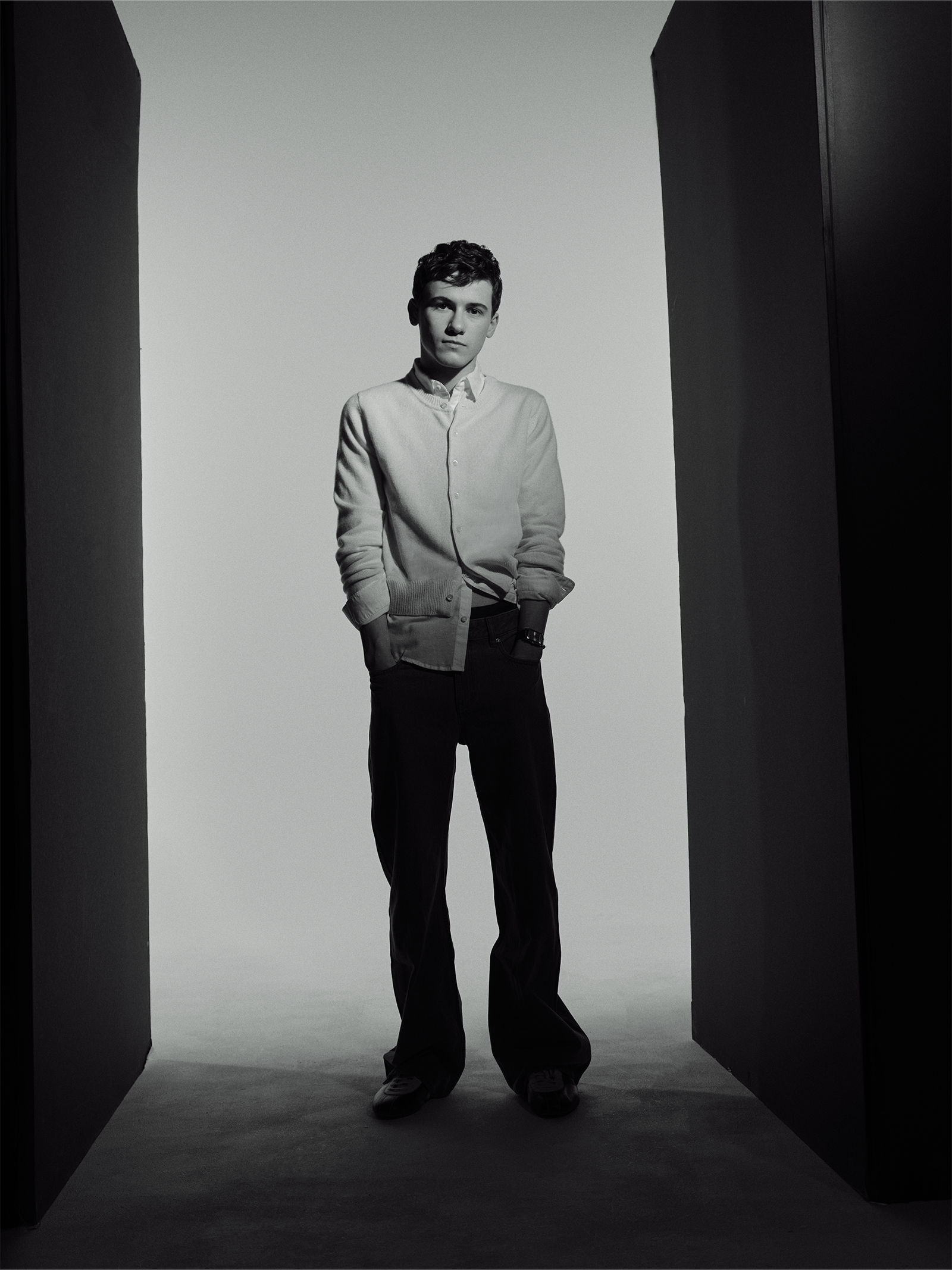
Okay, let’s talk about Phony. What were the elements of Nick Paley’s script that really drew you in initially?
The pilot was amazing, and it was a thing that all of my friends and I went up for and read, and we were all kind of like, “Wow, this is really original.” In a decade that is just so obsessed with IP and reusing the same tired ideas and sequels and spin-offs and reboots and whatever, it’s unbelievably exciting and refreshing to read a script that’s about something new, that’s meaningful, that has good dialogue, that’s funny, all those amazing things. I was fired up about it from day one when I read it, and then I sent my tape in and got a callback, and eventually, I flew out to L.A. to do a screen test for it.
I had lunch with Nick—the showrunner, writer, director—and he was just the most incredible, amazing guy. He was just so much like me. My dream has been to find a relationship with a director that’s like [The 400 Blows‘] Jean-Pierre Léaud and François Truffaut or Marcello Mastroianni and Federico [Fellini], these actors who are so similar to the director that the director makes these movies that are about themselves and then the actor plays a version of them. There’s not really a better example of a closer relationship between actor and director than when you’re playing a version of them. I met this guy, and he’s just like me, but [he’s] more emotionally intelligent and a smarter, better writer. What a treat it would be to get inside this guy’s mind and try to almost portray him and have him write for me. We had a great lunch. We loved a lot of the same things, and I was just like, “Fuck, if I don’t book this part, I’m gonna be so sad on the plane back to New York.”
How was the collaboration process creating the character Sonny?
I did a movie called Driver’s Ed, which was slightly different because it was an out-and-out comedy, but this was my first out-and-out lead role in a drama that also has comedic elements. I’ve only played supporting roles in the past. Supporting roles are really fun because you have a couple scenes, and you show up, and you just try to be noticed—something that’s interesting enough that people will remember you. If they don’t remember you, then it’s fine. Whereas with this, the stakes are so much higher because if they don’t like you, then they don’t like the show more often than not. You are carrying one of the main storylines on your shoulders.
Working with Nick was so amazing because I was afforded all this responsibility. I was awarded certain access to Nick and to the director that I’ve never had. Every director I’ve worked with has been amazing, and I’ve observed them from afar, and they’ve given me notes, but it’s been more like, “Wow, I look up to you, and I’m watching you and trying to do my best for you.” And this felt so much more like a collaboration. We were working together to find this character, and we’d come home from a 14-hour workday, and I’d call him up, and we’d talk about the character for two hours more. There’s nothing more rewarding than that because having conversations about things like that is just my favorite thing in the world, and to get to do that for a living and do that with someone who’s really as smart as Nick was such a relief and gave me a lot of access to understanding the character better.
You are working with the legendary Connie Britton (another White Lotus alum), who plays your mom and faux mom. There’s the one version you are incredibly close with and then the version you are scared of. How was it playing out those two different dynamics with Britton?
It was tough because I could never ever be scared of Connie because she is the sweetest, loveliest person ever. But in all seriousness, it was a complicated thing because… How can I say this without spoiling the whole show? It’s hard because she’s playing a mother. She’s playing a mother, and mothers, by and large, love their children. And I have to be scared of her because of something physical, not because of how she’s acting necessarily—apart from the hand squeeze. But those are actions, really. So it was, at times, difficult to figure out how to play that calculus without coming off as too monster-like for my interpretation of her. But she’s such an incredible actress that so much of my performance is a reaction to her. And if it had been anyone else, if it had been anyone less talented, it could have been really hard because I would have had to maybe create, synthesize more of a reaction to nothing, but she gave me everything. She’s so generous as a scene partner. She’s had so many years in TV, specifically. It was so amazing to watch her from the point of view, not only as an actor but also as a leader on a set and someone who has been around the block and knows what it’s like to be on a set. I was just like, “Wow, I really hope I can be that someday.”
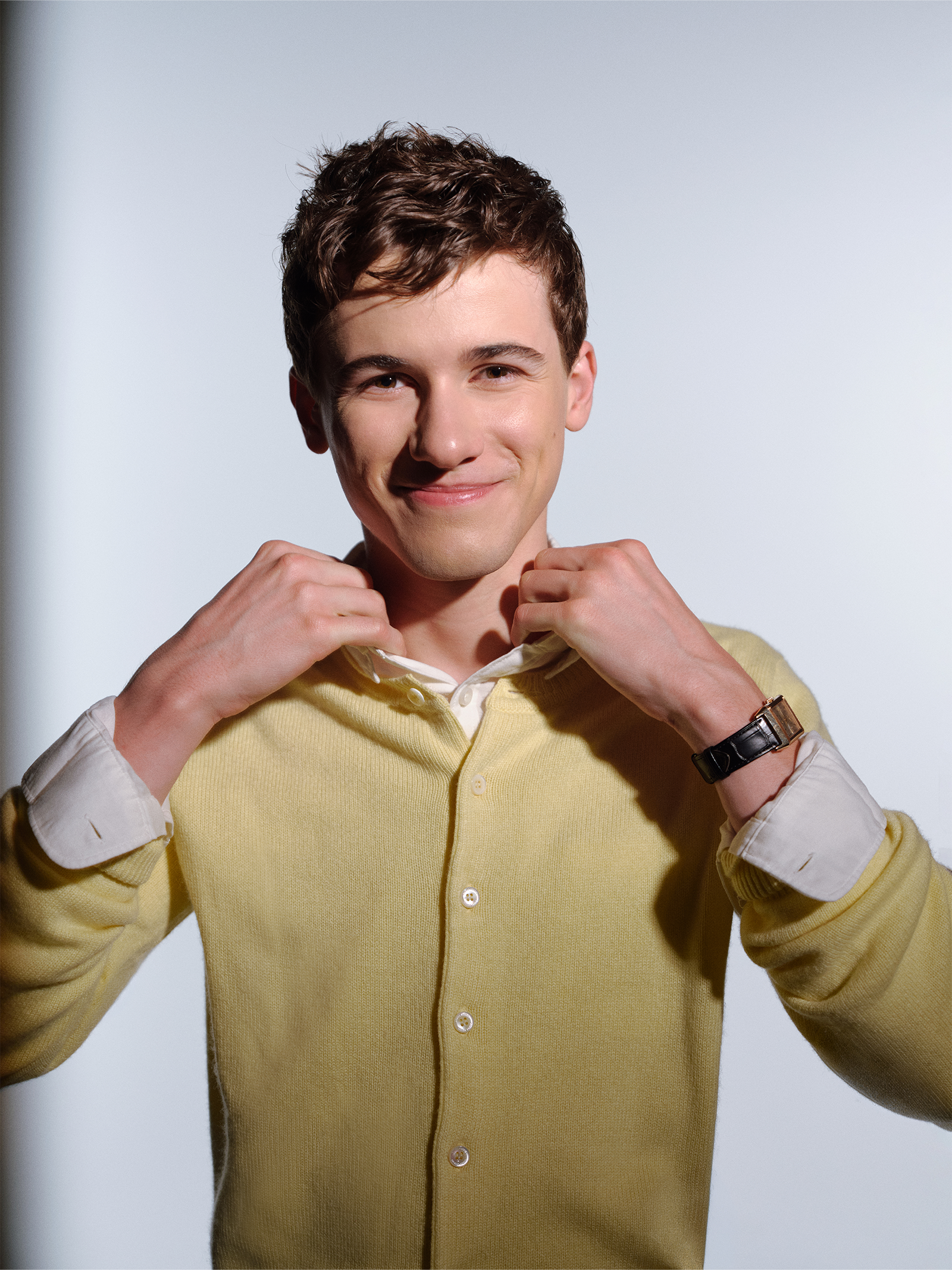
You started your own production company called Cold Worm. Firstly, where did that name come from?
It’s totally silly. It was when I was really little, and I felt like I wasn’t getting enough attention from my mom. I would literally pretend to be the classic thing that people say: Would you love me if I were a worm or whatever? When I was like 6 years old, I would pretend to be a freezing-cold earthworm out in the rain that needed attention and hugs in order to survive, which is the most pathetic, attention-seeking thing, just like all kids are. We had a bunch of ideas, but then we were like, “A cold worm would be a pretty cool logo.” I started it with two of my best friends, Teddy Ryan and Anthony Ertle. Teddy has been my best friend from when I was 2. We met in school. And Anthony was working as an assistant on White Noise, my first movie. He was from Cleveland, so he was a local hire there, and I really hit it off with him. I somehow roped him into moving to New York to start this thing.
You are really good at convincing people to come to New York.
I’m New York’s number one spokesperson, and now, we’re all here, and we have our separate jobs. I’m an actor, Teddy works for a director, and Anthony works in locations. We all do our own thing to make money, but at the end of every day, we have these long calls and writing workshops and pitches, and it’s incredibly fulfilling and fun.
What kinds of projects are you interested in making under the Cold Worm banner?
Whatever ideas seem really cool, we want to make it. It’s mainly stuff about youth. I would say it’s downright impossible at this point to be a burgeoning director and get a movie made within the studio system unless you’re like a Curry Barker and you have something blow up on the internet or like Backrooms. That’s incredibly respectable and awesome, but I don’t know a lot of guys or gals that are YouTubers or that have that kind of bone in their body. So for those of us who are just trying to make our movies, the studio system is gone for that now.
The goal for us is to really try and—not just with our company but [also] with the people we know in New York—create a community of people that all really care about movies as an art form and will do anything to get their movie made, and we’ll ask people on the street for money for it. Just go out and do it and, as a result, not have to have this constrictive oversight that working with studios gives you. We’ve produced two feature films now, both by pretty young people, and one short that I directed, and they’re all in various ways about coming of age. I think that’s a really big theme of just being young and being young in this world and how scary [it is] in the same way that it has been for every generation, but how it’s specific for ours.
I love that grassroots approach to filmmaking.
Yeah, we’ll see if any of this works. It’s still sort of a pipe dream. But we’ve made two. That’s better than none.
My last couple of questions are fashion related because you are a Dior guy, and you starred in the campaign this summer. How did your relationship with Jonathan Anderson come about? What do you love about him as a creative?
He’s a really smart guy. He studied fashion; he knows his shit. I don’t know as much about fashion as I should. I know that I have taste in fashion. I know that I think about what I wear, and when I look at someone’s outfit, I have an opinion about it, whether it be right or wrong. But I just love what he’s doing because it’s a very hard thing. It’s a lot easier when designers have their own brand that they completely control.
Working with a brand like Dior, in certain ways, it’s like being a director and then directing a movie in the MCU. Suddenly, there’s a framework, and there’s this history. Dior has this beautiful, lush history of style and an energy and a vibe. And his job is to revolutionize the vibe and make it something new and make it his own but also stay loyal to what it is and has always been. I don’t know how I would even begin to go about doing that. It’s an incredibly difficult thing, and he has pulled that off to the nth degree. It’s truly magnificent having gotten to witness history, those runway shows where you can see every little… Again, I’m not the right person to ask ‘cause I wish I knew a lot more about the history, but you can see this turn-of-the-century, Victorian, and old Parisian vibe that is clearly building on Dior’s history. And then you can see Jonathan and his craziness imbued into the clothes, and it’s just really impressive to be able to work within a system like that and tick all the boxes.
I can tell you have an appreciation for fashion and style yourself. Has working with Dior and Anderson influenced your own relationship with fashion and how you look at clothes?
It’s very different what you wear to a runway show versus what you wear walking down 14th Street. It’s very complicated. Since doing The White Lotus, I’ve had a lot of brands send me clothes. … I hate wasting things. I am sort of turning into this weird, I don’t know, identity-less person. I’m trying to retake hold of my style.
New episodes of Phony are now streaming on Hulu.
Photographer: JJ Geiger
Stylist: Ilaria Urbinati
Groomer: Sussy Campos